
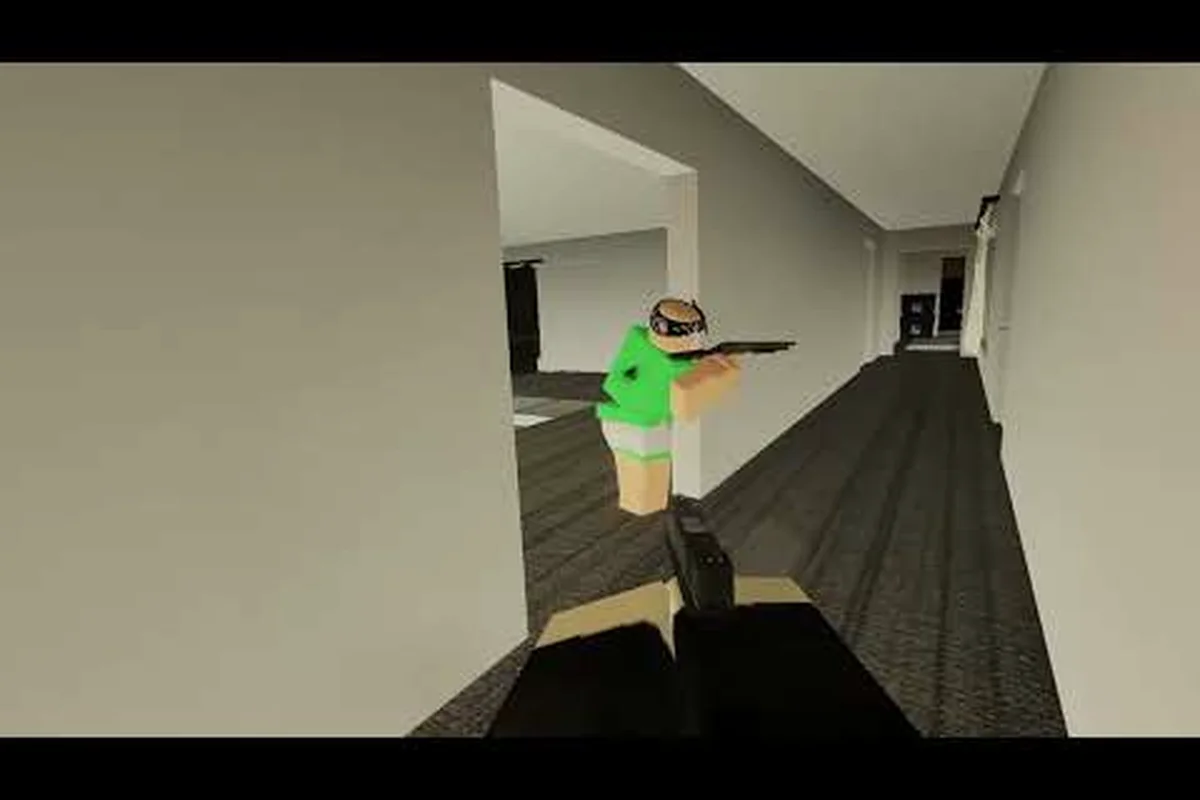
The realistic home defense game mechanics in REALISTIC HOME DEFENSE reward players who understand how fire modes, weapon handling, and tactical movement stack together during a breach. This breakdown explains how each system actually behaves so your first defensive hold doesn't turn into a scramble.
Most players lose their first few rounds not because they aim badly, but because they never learned how the shooting model punishes panic. Every trigger pull, every stance change, and every step through a doorway is governed by a small set of interlocking rules. Once you understand those rules, the chaos of a home invasion turns into a readable puzzle.
How the Core Realistic Home Defense Game Mechanics Fit Together
The foundation of every firefight is a three-layer system: weapon handling governs how fast you can bring a gun to bear, fire modes decide how much lead leaves the barrel per trigger pull, and tactical movement determines whether you can actually hold an angle while doing it. Ignore any one layer and the other two collapse.
Community testing and player reports consistently show that the shooting model is deliberately unforgiving. Recoil does not reset instantly, sprinting locks out your sights, and swapping weapons costs you a visible window of vulnerability. These aren't bugs — they're the design language of the game, and they're what separate a clean hold from a messy one.
| System Layer | What It Controls | Failure Symptom |
|---|---|---|
| Weapon handling | Draw speed, swap time, recoil recovery | You fire late or wide after a swap |
| Fire modes | Rate of fire, spread, ammo burn | You empty a mag on one target |
| Tactical movement | Stance, lean, sprint lockout | You get caught mid-stride in a doorway |
| Aiming model | Sway, sight alignment, target acquisition | First shot misses under pressure |
The key insight is that these layers interact multiplicatively, not additively. A perfect aim with terrible handling still loses to a mediocre aim with clean handling, because the handling player gets the first accurate shot off. If you want the deeper numbers behind draw speed and damage falloff, the weapon accuracy and loadout breakdown digs into the stat side of that equation.
Reading the HUD and Stamina Cues
Your stamina bar is not decorative. Sprinting drains it, and a drained bar forces a slower recovery animation that leaves you exposed for roughly a second and a half. Players who sprint to every breach point arrive winded and unable to aim steadily — a pattern that shows up constantly in beginner footage, including the popular Rispyif gameplay video where early rounds go sideways for exactly this reason.
Watch the small sway indicator near your reticle. When it widens, your accuracy is degraded and your next shot will drift. Waiting half a second for it to settle is almost always faster than firing into the wobble and missing.
Realistic Home Defense Fire Modes and the Control Trade Off
Fire modes are the single most misunderstood part of the shooting model. Each mode trades control for volume, and picking the wrong one for a given range is the most common cause of a lost engagement. The game does not auto-correct your choice — you have to switch manually, and switching takes time.
| Fire Mode | Best Range | Ammo Efficiency | Control Demand |
|---|---|---|---|
| Single shot | Long hallways, windows | Highest | Low |
| Burst fire | Mid-range rooms | Moderate | Medium |
| Full auto | Close quarters, doorway breaches | Lowest | High |
| Semi-auto rapid | Any range, skilled hands | High | Medium-high |
When Single Shot Wins
Long sightlines — a hallway, a stairwell, a window overlooking the yard — reward single shot almost every time. One well-placed round drops a target and preserves your magazine for the next three intruders. The realistic home defense fire modes system punishes spray here because recoil climbs fast and your second shot lands high.
Point Blank Moments That Justify Full Auto
Full auto exists for one scenario: an intruder is inside arm's reach of your position and you need maximum output immediately. Outside that bubble, full auto burns your mag in under three seconds and leaves you reloading while a second attacker walks through the door. Treat it as an emergency tool, not a default.
Burst fire sits in the sweet spot for most room-to-room fighting. Three rounds at mid-range usually secure a takedown while keeping enough rounds in reserve to handle a follow-up threat. The beginner weapon and PVP guide from Radex Tips walks through which starting guns handle burst mode most cleanly, which is worth watching before you commit to a loadout.
Realistic Home Defense Weapon Handling and Swap Discipline
Handling is where intermediate players separate from beginners. The realistic home defense weapon handling model tracks three timers: draw time when you first raise a weapon, swap time when you change guns, and recovery time after recoil. All three are visible if you know where to look, and all three can be shortened by positioning rather than stats.
-
Draw time punishes walking into a room with your gun lowered. Raise it before the corner, not after.
-
Swap time means your sidearm is not a panic button — it's a planned transition. Swap behind cover, never in the open.
-
Recovery time scales with how long you held the trigger. Tapping resets faster than holding.
-
Reload timing leaves you defenseless, so count rounds and reload during lulls, not mid-fight.
The practical takeaway is that handling is a positioning skill disguised as a stat. Two players with identical guns will have wildly different effective handling depending on whether they pre-aim corners and reload behind doorframes. The movement and combat fundamentals guide covers the stance and lean side of this in more depth.
Managing the Reload Window
Every reload is a vulnerability window, and smart defenders plan around it. Fire in short controlled strings, duck behind a wall or furniture, reload, then re-peek. Trying to reload while strafing in the open is how most defensive holds fall apart — the intruder simply walks up during your animation and ends the round.
Tactical Movement Under Pressure: Commitment and Predictability
Movement in this game is not about speed; it's about predictability. The realistic home defense tactical movement system makes your character commit to actions, so a sprint cannot be cancelled instantly and a lean exposes part of your body. Learning to move in short, deliberate bursts is the difference between holding a chokepoint and getting flanked.
| Movement Action | Speed | Noise | Aim Penalty |
|---|---|---|---|
| Walk | Slow | Silent | None |
| Sprint | Fast | Loud | Heavy |
| Crouch-walk | Very slow | Silent | None, lower profile |
| Strafe | Moderate | Light | Slight |
Why Noise Matters More Than Speed
Sound is a mechanic, not flavor. Sprinting telegraphs your position to every intruder in the building, and experienced players use that against you by baiting a sprint and then holding the angle you'll arrive at. Walking keeps you silent, which means the attacker has to guess where you are — a massive advantage in a dark house.
Holding Angles Without Overcommitting
The best defensive positions let you see a doorway without standing in it. Stand offset from the frame, lean to peek, and retreat the moment you take a hit. Committing to a full-body peek in a doorway is the single most common death in the game, and it's entirely avoidable with a half-step of discipline.
Realistic Home Defense Aiming Guide for Real Engagements
Aiming under pressure is a different skill from aiming at a static target. The realistic home defense aiming guide boils down to three habits: pre-aim the likely entry point, keep your reticle at chest height, and let the sway settle before you fire. Players who master these three habits land first shots far more often than players who rely on flick speed.
-
Pre-aim the doorway before the intruder appears, so your first movement is a micro-adjustment, not a full swing.
-
Chest height keeps your reticle ready for both standing and crouching targets without a big vertical correction.
-
Sway patience costs half a second and saves a whole magazine.
-
Trigger discipline means one shot per confirmed target, not three per shadow.
If your aim still feels inconsistent after applying these, the early game progression guide explains how to build the fundamentals in low-stakes rounds before you take them into a real breach.
Crosshair Placement in Tight Rooms
In a narrow room, your crosshair should sit on the corner the attacker must round, not the center of the room. Attackers have to appear somewhere specific, and that specific spot is where your reticle belongs. This single habit reduces reaction time more than any sensitivity tweak.
Realistic Home Defense Shooting Mechanics: Recoil and Follow-Up Shots
The realistic home defense shooting mechanics model recoil as a climbing pattern that resets only when you stop firing. That means your second and third shots drift upward and slightly to one side, and the only way to counter it is to pause or pull down. Spraying through a full magazine sends most rounds into the ceiling.
| Shot Number | Approximate Drift | Recommended Action |
|---|---|---|
| First shot | None | Fire immediately |
| Second shot | Slight rise | Micro pull-down |
| Third shot | Noticeable climb | Pause and reset |
| Fourth+ | Heavy climb | Stop firing |
The Reset Rhythm
Think of your firing as a rhythm rather than a stream. Two or three rounds, brief pause, two or three more. This rhythm keeps your shots on target and preserves ammo, and it's the pattern that experienced defenders fall into naturally after a few rounds. The hallway defense and room clearing tactics guide applies this rhythm to specific chokepoints around the house.
Putting the Mechanics Together in a Real Hold
A clean defensive hold combines all four systems in sequence. You walk silently to a chokepoint, pre-aim the doorway, hold single shot for the long sightline, and switch to burst only when the fight closes to room distance. You reload behind cover, never in the open, and you retreat rather than overcommit when you take damage.
The players who consistently win rounds aren't doing anything exotic — they're just respecting the timers. Draw time, swap time, recoil reset, and stamina recovery are all visible and all predictable, which means every engagement is a problem you can solve in advance rather than a reflex test you have to win in the moment.
Treat each breach as a checklist: gun up before the corner, correct fire mode for the range, reticle on the likely entry, and a reload planned for the next lull. Do that consistently and the realistic home defense game mechanics stop feeling punishing and start feeling fair.
Frequently Asked Questions
What are the most important realistic home defense game mechanics to learn first?
Start with weapon handling and fire modes, because they decide whether your first shot lands. Draw time, swap time, and recoil reset are all visible timers you can plan around, and getting them right matters more than raw aim speed in almost every engagement.
Which fire mode should I use for hallway fights?
Single shot is the strongest choice for long sightlines like hallways and stairwells. It preserves ammo, keeps recoil low, and drops targets in one clean round. Switch to burst only when the fight closes to room distance and you need faster follow-up shots.
How does tactical movement affect my accuracy?
Sprinting applies a heavy aim penalty and drains stamina, which forces a slow recovery animation. Walking keeps you silent and accurate, so you can hold an angle without telegraphing your position. Crouch-walking trades speed for a lower profile and no aim penalty.
Why do my follow-up shots keep missing?
Recoil climbs with each consecutive round, so your second and third shots drift upward. Fire in short two-to-three round strings, pause to let the pattern reset, then fire again. Spraying a full magazine sends most rounds high and leaves you reloading at the worst moment.
Does weapon handling matter more than damage?
In most defensive fights, yes. A player with clean handling gets the first accurate shot off, and the first accurate shot usually decides the engagement. Damage matters, but only after you've actually put a round on target, which handling makes possible.