
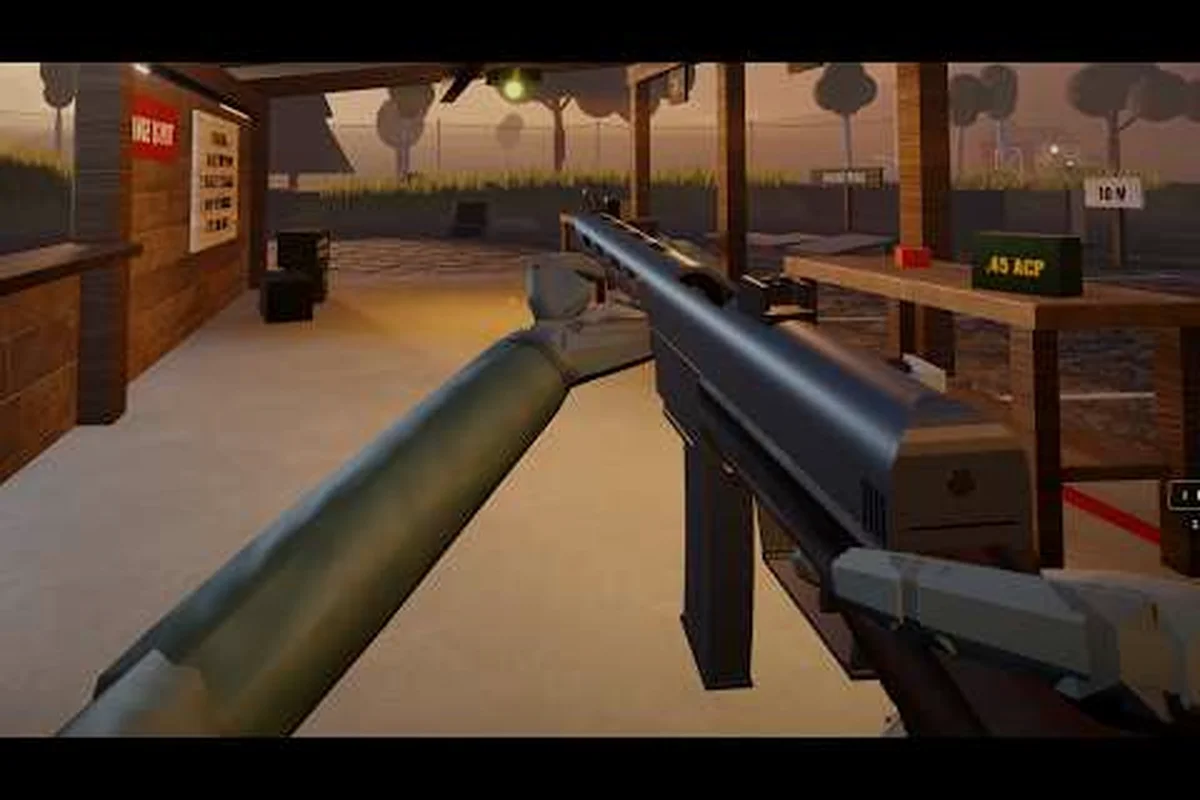
Getting better at REALISTIC HOME DEFENSE comes down to three habits: crosshair placement before you peek, recoil control during sustained fire, and reading audio cues so you rotate before the enemy reaches your door. This guide breaks down the exact drills and settings that separate players who hold a room from players who get cleared in the first thirty seconds.
The game is a first-person tactical shooter built around close-quarters home-defense fights, and it launched in October 2026 with realistic weapon mechanics and tactical movement at its core, according to the official REALISTIC HOME DEFENSE page. That realism cuts both ways: the same systems that punish sloppy aim also reward players who understand how recoil, stance, and sound actually work. If you have been stuck in the middle of the scoreboard, the problem is rarely raw reflexes — it is almost always decision-making before the fight starts.
Why Most Players Plateau in REALISTIC HOME DEFENSE
The most common plateau happens when a player learns the maps but never learns the timing. You know where enemies come from, yet you still lose duels because you are reacting to gunfire instead of anticipating it. Fixing that gap is the entire point of this realistic home defense advanced guide.
Here is what separates the two skill brackets in practice: it is rarely raw aim, and almost always pre-contact preparation. An average player hears a footstep and only then begins to swing toward the noise, arriving late with their crosshair still at chest height. A strong player treats that same footstep as a rotation trigger — they are already pre-aimed at head height on the likely entry, holding cover with a fallback lane, and firing in controlled 3-5 round bursts instead of dumping the mag through the spray. The measurable difference shows up in time-to-first-shot and in how many duels are won before the enemy even clears the doorway.
| Skill Area | Average Player Behavior | Strong Player Behavior |
|---|---|---|
| Crosshair placement | Aiming at the floor or doorframe | Pre-aimed at head height on the likely entry |
| Peeking | Wide-swinging every corner | Short-peeking and re-clearing with lean |
| Recoil | Holding the trigger through the spray | Firing in 3-5 round bursts with reset |
| Audio | Reacting to footsteps after they stop | Rotating on the first footstep sound |
| Positioning | Standing in the open doorway | Holding cover with an escape lane |
The pattern is consistent: strong players spend more time preparing and less time correcting. Every one of those habits is trainable in a handful of sessions, and none of them require better hardware or a faster connection. Take crosshair placement alone — dropping your reticle from doorframe to head height before every corner is a mechanical drill you can run solo in an empty lobby for ten minutes a night, and it directly cuts your time-to-first-shot on the first contact of a round. The same holds for audio: learning to rotate on the first footstep rather than the last one is a listening habit, not a reflexes stat, so a player on a stock mouse and 60 Hz monitor can close that gap just as fast as someone on a 240 Hz setup. Stack three of these fixes — pre-aim, short-peek with lean, and 3-5 round burst resets — and the correction phase of each round shrinks on its own, because you are arriving at the angle already set instead of scrambling to fix a bad one.
A useful mental model is to treat each round as two phases — the setup phase and the contact phase. During setup you should already know your primary angle, your fallback cover, and the sound cue that triggers your rotation. Contact should feel like confirming a plan rather than improvising one. Players who report the biggest improvement in a single evening almost always describe the same shift: they stopped wandering and started holding.
The Setup Phase vs. the Contact Phase
Setup is where rounds are won. Walk your hold before the first enemy arrives, confirm your sightline covers the doorway without exposing your whole body, and identify the nearest piece of hard cover you can retreat behind. If you cannot name your fallback position out loud, you do not have one.
Contact is where you execute. Fire in controlled bursts, call out what you see if you are grouped, and reposition the moment your first burst misses. Standing still after a whiffed spray is the single fastest way to lose a winnable fight.
Aim Fundamentals: Crosshair Placement and Recoil Control
Aim in this game is less about flick speed and more about where your crosshair already sits when the fight begins. Players who complain about "bad aim" usually have fine mechanical tracking — they are simply starting every duel with the crosshair in the wrong place, which forces a correction they cannot win.
Pre-Aiming the Common Angles
Before you round a corner, place the crosshair at head height on the edge of the wall you expect the enemy to appear from. Keep it tight to the corner rather than floating in open space. When you do peek, you should only need a small adjustment, not a full swing. This one habit alone accounts for most of the "how did they hit that" moments you see in kill feeds.
Burst Firing and Recoil Reset
Sustained automatic fire climbs fast in a realistic shooter, so treat the trigger as a series of short commitments. Fire three to five rounds, let the weapon settle, then re-engage. If you must spray, pull down and slightly inward to counter the climb, and stop firing the instant your target breaks line of sight — continuing to spray at a wall only tells the enemy exactly where you are.
The movement and combat mechanics breakdown covers how stance, lean, and sprint recovery interact with your first shot, which matters more than most players realize. Concretely: firing while still in sprint recovery throws your first burst wide, so a three-round commitment that would land in a tight group from a planted stance scatters across the doorway instead — and against a home invader holding a hallway angle, that miss buys them the half-second needed to return fire. Lean into corners rather than stepping out, and let the meter settle before you re-engage, because recoil reset and movement accuracy are governed by the same recovery window.
Sensitivity and Settings That Actually Help
Chasing a pro player's sensitivity is a trap. What matters is that your sensitivity lets you track a strafing target at close range without overshooting. Test it this way: pick a doorway, strafe back and forth while keeping the crosshair on the frame. If you constantly swing past it, lower your sensitivity slightly. If you cannot turn fast enough to check your flank, raise it. Repeat until both feel comfortable, then stop changing it — consistency beats optimization.
Reading Enemy Pushes Before They Reach Your Door
Sound is the most underused information source in the game. Footsteps, reloads, and door interactions all leak position, and a player who rotates on the first cue will beat a player who reacts to the first bullet almost every time.
| Audio Cue | What It Tells You | Recommended Response |
|---|---|---|
| Footsteps on wood | Enemy is inside the structure | Hold tight angle, do not reposition loudly |
| Metallic clink | Enemy is on stairs or a railing | Pre-aim the stairwell exit |
| Reload sound | Enemy is vulnerable for roughly 2 seconds | Push immediately if you have cover |
| Door interaction | Enemy is committing to that entry | Rotate to a flank or pre-fire the doorway |
| Silence after footsteps | Enemy is holding an angle, waiting for you | Do not walk into it; use utility or flank |
The last row is the one that kills good players. Silence is not safety — it usually means someone is standing still with their crosshair on the door you are about to walk through. When the noise stops, slow down and approach from a different angle instead of assuming the fight is over.
Using Sound to Pre-Rotate
Rather than waiting to confirm a push, start moving the moment you hear the first cue and arrive before the enemy clears the corner. Pre-rotation is only possible if you already know your map's rotation routes, so spend a few rounds walking them without firing a shot. The beginner-friendly game overview explains the map flow and common entry points if you are still learning the layouts.
Positioning and Hold Selection for Home Defense
Where you stand determines how many enemies can shoot you at once. Good positioning is not about hiding — it is about limiting the number of angles you must cover while keeping an exit available. A concrete example: holding at the end of a hallway with your back to an exterior door forces every attacker into one narrow funnel, so you only track a single sightline instead of three, while the door behind you stays clear as a fallback route. Contrast that with standing in an open living room, where a staircase, a side window, and the front entry each present a separate angle — three threats to monitor at once. The rule of thumb: if you cannot name your exit and count your exposed angles in under two seconds, you have picked a bad hold and should reposition before contact.
The Three-Second Rule
If you cannot break contact with an attacker within roughly three seconds of being spotted, your position is too exposed. That does not mean you must win the fight in three seconds; it means you need a route to cover that fast. Doorways, open hallways, and window sightlines all violate this rule unless you have a wall to duck behind.
Holding With an Escape Lane
Every hold should include a fallback. Stand so that one step backward puts hard cover between you and the entry. This lets you reset a fight you are losing instead of dying in place. Players who consistently top the scoreboard rarely win every duel — they simply refuse to lose the same duel twice in a row.
Trading Space for a Better Angle
Giving up a room is not losing. If two enemies push your position from different angles, retreating to a tighter corridor forces them to stack up and fight you one at a time. Trading space for a better angle is one of the most reliable realistic home defense pro tips you can apply immediately.
Practice Routine: Drills That Build Real Improvement
Improvement comes from repetition with intent, not from grinding matches on autopilot. A short, focused routine beats a long unfocused session every time, because deliberate practice isolates one variable at a time — crosshair placement, burst control, or audio reads — so you can actually tell what changed when a fight goes differently. If you spend a two-hour session chasing kills across random lobbies, you never learn which habit failed on a given death; a 27-minute block that splits time across those isolated skills gives you a clean before-and-after on each one. The key is treating every session as a test of a single habit rather than a performance, so a bad match still teaches you something concrete about your first-contact timing or your peek discipline.
-
Five minutes of crosshair placement: walk the map and keep your crosshair at head height on every corner without firing.
-
Five minutes of burst control: shoot a wall at close, medium, and long range, firing three-round bursts and checking where the group lands.
-
Five minutes of audio drills: play a round with the intent of calling out every sound you hear before you see the source.
-
Ten minutes of live matches: apply one habit per match rather than trying to fix everything at once.
-
Two minutes of review: after each session, note the one death that felt avoidable and what cue you missed.
Tracking your progress matters as much as the drills themselves. Note your average survival time and your first-contact win rate rather than your total kills, because kills reward aggression while survival rewards discipline. Players who measure the right stat improve roughly twice as fast in the early going, based on community reports from the game's discussion threads.
Cash flow also shapes how quickly you can experiment with loadouts, and the money multiplier system explains how grouping and community membership boost your earnings so you can afford to test different setups.
Common Mistakes That Stall Your Progress
Most stalled players share the same handful of habits, and each one is fixable within a session or two — but only if you diagnose the right one. The table below breaks down five recurring mistakes, from wide-swinging every corner to standing dead-center in doorways, pairing each with why it costs you the fight and the specific fix. Treat it as a checklist rather than a lecture: pick the single habit you recognize most in your own gameplay, run one match focused solely on correcting it, then move to the next. Trying to fix all five at once usually means none of them stick, so isolate one variable at a time and review what changed.
| Mistake | Why It Hurts | Fix |
|---|---|---|
| Wide-swinging every corner | Exposes you to multiple angles at once | Short-peek and lean instead |
| Chasing kills across the map | Abandons your hold and your cover | Let enemies come to your angle |
| Ignoring the reload timer | You get caught mid-animation | Reload behind cover, never in the open |
| Standing in doorways | You become the easiest target in the room | Hold from an offset angle beside the frame |
| Playing on autopilot | No habit actually changes | Pick one focus per match |
The doorway mistake deserves extra attention because it is so common. A doorway frames you perfectly and gives attackers a predictable silhouette. Standing a step to the side, behind the wall, forces them to commit before they can see you — a small change with an outsized effect on your survival rate.
Community commentary has questioned how realistic the gunplay really feels, as discussed in CAM!'s gameplay critique, but the practical takeaway holds either way: whether the recoil is authentic or exaggerated, the counter-play is the same. Learn the pattern, burst, and reset.
Breaking the Autopilot Habit
Autopilot is the quiet killer. It looks like playing a lot while learning nothing, because your hands repeat the same decisions without review. The fix is to give each match a single focus — for example, "this match I only pre-aim" — and judge yourself on that focus rather than the scoreboard. Over a week, that compounds into permanent habits.
Frequently Asked Questions
How long does it take to get better at REALISTIC HOME DEFENSE?
Most players notice a clear jump in survival rate after roughly three to five focused sessions using a structured routine. The gains come from crosshair placement and audio awareness rather than raw aim, which is why they show up quickly once you practice them deliberately instead of grinding matches on autopilot.
What is the most important skill for defending a room?
Crosshair placement. If your crosshair is already at head height on the likely entry, you only need a small adjustment to land the first shot. Players who start every duel with a large correction lose fights they should win, even when their tracking is technically fine.
Should I hold an angle or push the enemy?
Hold, unless you have a concrete reason to move — a reload sound, a confirmed flank, or a numbers advantage. Pushing gives up your cover advantage and hands the enemy the pre-aim. Defenders win by forcing attackers to commit first, so patience is usually the higher-value play.
How do I stop dying to enemies I never see?
Slow down at chokepoints and listen before you move. Most unseen deaths come from walking into a held angle after the footsteps go quiet. When the sound stops, assume someone is waiting and approach from a different route or pre-fire the common spot.
Do money multipliers help me improve faster?
Indirectly, yes. Extra cash from grouping and community membership lets you test more loadouts and attachments without grinding, which shortens the trial-and-error phase. The income and multiplier stacking breakdown covers the fastest ways to build that budget.
Getting better at REALISTIC HOME DEFENSE is a matter of preparation, not reflexes. Pre-aim the angles you expect, fire in controlled bursts, rotate on the first audio cue, and always hold a position with an escape lane behind you. Run the short practice routine before your matches, focus on one habit at a time, and review the avoidable deaths instead of the lucky kills. Those habits compound quickly, and within a week you will be the player holding the room rather than the one walking into it.