
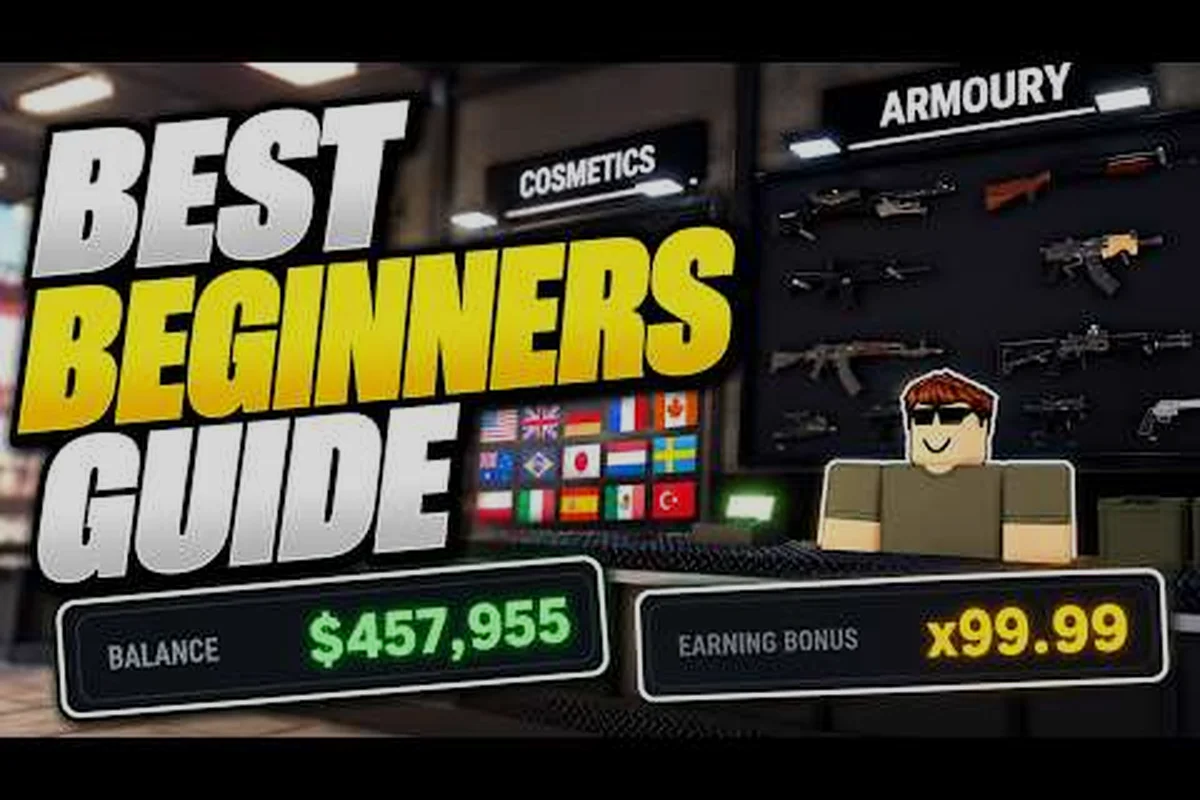
REALISTIC HOME DEFENSE is a first-person tactical shooter on Roblox where recoil control, deliberate movement, and smart money management decide whether you survive a breach or get dropped in the first doorway. This realistic home defense beginner guide focuses on the three systems that actually gate your progress: how weapons kick, when to stand still, and how to stack cash multipliers before you buy a single attachment. Get these right early and the rest of the game opens up fast.
What REALISTIC HOME DEFENSE Actually Asks of New Players
The first thing to understand when you are getting started is that this is not a run-and-gun deathmatch. The official Roblox game page describes it as a close-quarters home-defense shooter built around realistic weapon mechanics and tactical movement, and that framing matters more than any single stat. Your gun has weight, your character has momentum, and every shot you fire without a stable stance costs you accuracy you cannot buy back mid-fight.
New players usually lose their first ten matches for the same three reasons: they sprint into rooms, they hold the trigger, and they buy cosmetics before attachments. Fixing those habits is the entire point of this realistic home defense complete guide, because each one compounds. A player who walks instead of sprints arrives with a full magazine and a steady reticle; a player who taps instead of sprays lands two extra hits per engagement; a player who buys a foregrip first wins the mid-range fights that decide rounds.
Here is the priority order most experienced players recommend for your first session, and it is deliberately ordered by return on investment rather than excitement: learn the map layout before you learn the guns, since knowing which hallway has a hard corner saves more lives than any optic; set your sensitivity once and leave it alone, because constant changes reset your muscle memory every match; then play with at least one friend and join the official group, since both stack cash multipliers that fund your attachments faster.
-
Learn the map layout before you learn the guns — knowing which hallway has a hard corner saves more lives than any optic.
-
Set your sensitivity once and leave it alone — constant changes reset your muscle memory every match.
-
Play with at least one friend — the money multiplier alone justifies it, and a second set of eyes covers your flank.
-
Join the official group — it stacks another cash multiplier on top of the friend bonus.
-
Buy a foregrip before anything else — recoil control is the single biggest early upgrade.
That last point deserves emphasis. According to player reports and community guide videos, the recoil system is the defining mechanic of the game, and it punishes anyone who treats the trigger as a hold-down button. If you want a deeper breakdown of the movement side of that equation, the gameplay guide on playing better walks through positioning habits that pair directly with what follows here.
How Recoil Works and Why It Decides Fights
Recoil in this game is not a cosmetic camera shake — it is a real accuracy penalty that grows with sustained fire and only recovers when you stop shooting. The first bullet from a cold barrel goes exactly where your reticle points. The fifth bullet in a burst does not. Understanding that curve is the difference between a player who wins duels and one who empties a magazine into a doorframe.
The practical rule is simple: fire in short bursts, let the reticle settle, then fire again. At close range you can afford three or four rounds before the spread becomes unmanageable. Past about ten meters, two-round taps are the only reliable option. Players who master this rhythm consistently out-trade opponents who spray, even when the sprayer has a better weapon.
| Fire Pattern | Rounds Fired | Effective Range | Accuracy Retention | Best Use Case |
|---|---|---|---|---|
| Single tap | 1 | Any | Near perfect | Long hallways, holding angles |
| Controlled burst | 2-3 | Close to mid | High | Standard room clearing |
| Extended burst | 4-6 | Close only | Moderate | Point-blank panic defense |
| Full spray | 7+ | Under 5 meters | Poor | Almost never worth it |
The table above reflects the pattern most players converge on after a few hours, though exact values may shift with patches. What does not change is the underlying logic: recoil recovery is faster than recoil accumulation, so the player who pauses wins the exchange against the player who does not.
Choosing Your First Weapon Around Recoil
Weapon choice should follow your recoil comfort, not the other way around. High-fire-rate weapons amplify every mistake you make with the trigger, while slower, harder-hitting options forgive sloppy timing because each individual shot matters more than the rhythm. For a brand-new player, the slower weapon is almost always the correct pick, even if it looks less exciting on paper.
Community guide videos from creators like Radex Tips consistently recommend starting with a controllable mid-tier rifle rather than chasing the most expensive option in the shop. The reasoning is straightforward: an expensive gun you cannot control loses to a cheap gun you can. Once your burst discipline is automatic, upgrade to something with a higher ceiling.
Movement Discipline: When to Hold and When to Move
Movement in REALISTIC HOME DEFENSE is a resource, not a default state. Sprinting gets you to a fight faster and gets you killed faster, because you arrive with degraded accuracy and no audio information about what is ahead. The realistic home defense how to play question almost always comes down to this: knowing the difference between repositioning and charging.
Walking is your default. It keeps your weapon ready, keeps your footsteps quiet enough to hear an opponent, and keeps your first shot accurate. Sprint only when you are crossing open ground with no contact, rotating to a callout your teammate just made, or escaping a fight you have already lost. Every other moment, walk.
| Situation | Recommended Movement | Reason |
|---|---|---|
| Clearing an unknown room | Walk, slow peek | Preserves accuracy and audio |
| Crossing an open courtyard | Sprint, then stop | Minimizes exposure time |
| Holding a defensive angle | Stand still or crouch | Maximum accuracy on first shot |
| Rotating after a teammate callout | Sprint | Speed matters more than stealth |
| Retreating from a lost fight | Sprint behind cover | Survival outweighs accuracy |
Holding an angle deserves its own note. Standing still behind cover with your reticle pre-placed at head height is the highest-value action in the game, because it converts your opponent's movement into your advantage. The player who moves first into a held angle almost always loses. If you are defending, let them come to you.
Using Audio Intel Before You Round a Corner
Audio is the cheapest information in the game and the most underused by beginners. Footsteps tell you direction and rough distance; gunfire tells you weapon type and how many opponents are engaged. Before you round a corner, stop moving for two full seconds and listen. That pause costs you nothing and frequently saves the round.
Players who learn to pair sound with movement discipline report a sharp drop in deaths to ambushes. The pattern is consistent across community testing: most beginner deaths happen within three seconds of entering a new room, and most of those entries were made without any audio check beforehand.
Money Multipliers and Building Your First Loadout
The economy in this game rewards planning more than grinding. The official game page confirms two stacking multipliers: playing with friends adds bonus cash, and joining the IBA Community group adds another on top. Stacking both means every match pays meaningfully more than a solo session, which shortens the gap between a bare loadout and a competitive one considerably.
| Multiplier Source | How to Activate | Effect | Priority |
|---|---|---|---|
| Friend bonus | Play in a party | Bonus cash per match | High |
| Group bonus | Join IBA Community group | Additional cash multiplier | High |
| Match performance | Wins and objective play | Scales base payout | Medium |
| Session consistency | Regular play | Compounds over time | Medium |
The order you spend that money matters as much as how you earn it. New players tend to buy the flashiest weapon first and then discover they cannot control it. A better sequence is to buy recoil control, then accuracy, then raw damage. Each step makes the next purchase more effective, because a controllable gun with a foregrip outperforms an uncontrollable gun with a scope in nearly every engagement.
If you are still deciding which platform to play on, the cross-platform support breakdown covers how controls and performance differ between PC, console, and mobile, which directly affects how much recoil you can realistically manage.
A Practical First-Session Spending Plan
-
Match one and two — play with a friend, join the group, and bank everything.
-
Match three — buy a foregrip for your starter weapon.
-
Match four and five — add a sight that suits your engagement range.
-
Match six onward — save toward a mid-tier rifle you have already test-fired in a low-stakes round.
-
Never — spend on cosmetics until your loadout is functional.
Following that plan, most players reach a competitive loadout within a handful of sessions rather than grinding for hours with a weapon they cannot aim. The early game guide expands this into a fuller step-by-step progression if you want a longer roadmap.
Common Beginner Mistakes That Cost You Matches
Most early losses trace back to a short list of repeatable errors, and each one is fixable within a single session. The pattern is consistent: beginners over-rotate on aggression (sprinting into rooms, holding the trigger through a full magazine) while neglecting the passive advantages that actually win rounds — attachments that tame recoil, footsteps that reveal enemy rotations, and party play that splits the objective. Fixing one leak per session, starting with the cheapest (audio and attachments before raw weapon upgrades), compounds faster than grinding aim alone. Recognizing these mistakes is faster than learning them the hard way.
-
Sprinting into every room — you arrive loud, inaccurate, and predictable.
-
Holding the trigger through a whole magazine — recoil turns your last five shots into noise.
-
Buying weapons before attachments — an uncontrollable gun is worse than a controlled starter.
-
Ignoring audio — footsteps are free intel and most players skip them.
-
Playing solo when a party is available — you are leaving money on the table every match.
-
Changing sensitivity constantly — muscle memory needs consistency to form.
The sensitivity point is worth expanding. Aim is a trained reflex, and every settings change resets the training. Pick a value that lets you turn roughly 180 degrees with a comfortable swipe, then leave it for at least a week. If you are on mobile specifically, the sensitivity and graphics settings guide covers the values that work best on touch controls.
Frequently Asked Questions
What should I buy first in REALISTIC HOME DEFENSE?
Buy a foregrip for your starter weapon before anything else. Recoil control is the largest single upgrade available to a new player, and it improves every subsequent purchase. Weapons and optics come later, once your burst discipline is consistent enough to use them properly.
Does playing with friends actually increase my money?
Yes. The official game page confirms that party play adds a cash multiplier, and joining the IBA Community group stacks another multiplier on top. Running both together is the fastest legitimate way to fund a competitive loadout without grinding solo matches for hours.
How many shots should I fire before letting the recoil reset?
Two to three rounds at close to mid range, and a single tap beyond that. Recoil recovery is faster than accumulation, so short bursts with a brief pause consistently out-trade full sprays. Players who master this rhythm win duels even with cheaper weapons.
Is this game playable on mobile and console?
Yes, and controls differ meaningfully between platforms. On mobile, recoil management is harder because touch controls lack the fine aim adjustment of a mouse, so mobile players should lower their sensitivity and reduce graphics settings before their first serious match to keep frame rates stable during burst fire. PC players generally have the easiest time with precise burst fire, since a mouse allows the small downward drag needed to keep a two-to-three round burst on target. Console players sit in between, relying on aim assist to compensate for stick drift during recoil recovery.
How long does it take to get a good loadout?
Most players reach a functional, competitive loadout within five to eight sessions if they stack both money multipliers and follow a disciplined spending order. Grinding solo without multipliers roughly doubles that timeline, which is why party play is recommended from match one.
Turning the Beginner Habits Into Routine
The realistic home defense beginner guide really comes down to three habits: fire in short bursts so your reticle stays honest, walk instead of sprinting into unknown rooms, and stack both cash multipliers before you spend a single coin. Those three decisions separate a player who improves every session from one who plateaus with an expensive gun they cannot control. Start with recoil control, build movement discipline on top of it, and let the money multipliers fund the loadout that makes both habits pay off.