
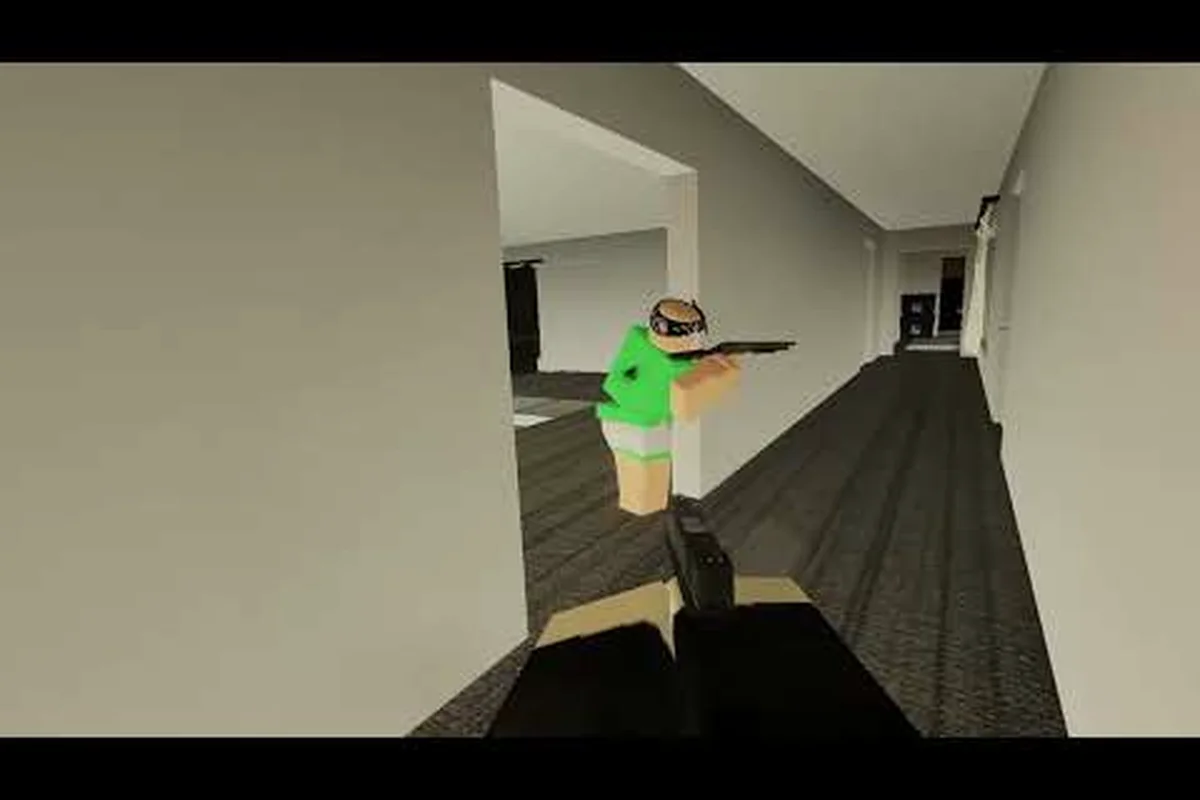
Aiming down sights in REALISTIC HOME DEFENSE is not a free accuracy upgrade — it trades mobility and peripheral vision for precision, and that trade decides most fights. Understanding how the aim down sights system interacts with recoil, hip fire, and tight indoor spaces is the fastest way to stop losing gunfights you should win.
How Aim Down Sights Changes Your Gunfight
The moment you press the aim button, your character slows to a walk, your field of view narrows, and your weapon's spread tightens dramatically. That trade is the entire foundation of the REALISTIC HOME DEFENSE aim down sights system, and it is deliberately punishing if you scope at the wrong moment. In open hallways and long sightlines, the accuracy gain is worth the lost speed. In a doorway at three meters, it usually is not.
Three things change the instant you raise the weapon: your movement speed caps at a slow walk, your peripheral cone collapses to a narrow center channel, and your first-shot spread collapses toward zero. That last point is the payoff — a pre-aimed corner shot lands where the crosshair sits, while a reactive doorway scope still eats the hip-fire penalty during the raise animation, so the intruder's first round often beats yours. The net effect is that aim down sights converts preparation into accuracy and reaction into a slow walk, which is exactly why the fight system punishes scoping after contact rather than before it.
-
Movement speed drops to a slow walk, so you cannot strafe out of a bad angle while scoped.
-
Peripheral vision narrows, which is why attackers approaching from a side room often land the first shot.
-
First-shot accuracy improves sharply, rewarding players who pre-aim a corner before an intruder rounds it.
Community reports consistently describe the same pattern: players who scope early and hold the angle win long-range exchanges, while players who scope reactively in a doorway get punished. The REALISTIC HOME DEFENSE fight system rewards preparation over reaction, and aim down sights is where that philosophy is most visible.
Scope Timing: Pre-Aim vs Reactive Aim
Pre-aiming means you are already scoped when the threat appears. Reactive aiming means you see the threat first and then raise the weapon. The second option costs you roughly the time of one extra shot, and in close quarters that is often the whole fight. Practicing pre-aim on common entry points — front doors, hallway corners, stairwell tops — converts a lot of lost rounds into wins.
Recoil Control While Scoped
Recoil in this game is not a cosmetic camera shake. Each shot pushes your point of aim upward and slightly sideways, and the climb is most severe during the first few rounds of a burst. That is why REALISTIC HOME DEFENSE recoil control is really about burst discipline rather than dragging your mouse down as fast as possible.
The table below breaks down how each firing rhythm actually behaves at the engagement distances you'll face indoors, using community testing and player reports from REALISTIC HOME DEFENSE matches. Note the vertical climb column in particular: a single tap barely moves your reticle, a 3-4 round controlled burst pushes it up a manageable amount, and an 8+ round full auto spray sends your muzzle climbing so far that re-acquiring the target costs you precious seconds. In close quarters combat, that recovery window is often longer than the fight itself, which is why the data consistently favors short, deliberate trigger pulls over holding down the fire button.
| Firing Rhythm | Shots Fired | Vertical Climb | Practical Use |
|---|---|---|---|
| Single tap | 1 per press | Minimal, resets fast | Long hallways, holding a doorway |
| Controlled burst | 3-4 rounds | Moderate, manageable | Mid-range rooms, stairwells |
| Full auto spray | 8+ rounds | Severe, hard to recover | Almost never worth it indoors |
| Hip fire burst | 3-5 rounds | Wide but forgiving | Point-blank, around corners |
The pattern is simple: the longer you hold the trigger, the more your muzzle drifts off target, and indoors you rarely have the space to let it recover. Tapping and short bursts keep your shots inside the target zone, while spraying turns a winning angle into a coin flip.
Pulling Down vs Letting Off
Two schools of thought exist among players. The first is to actively pull the aim down while firing to counteract climb. The second is to fire short bursts and simply let the weapon settle between them. The burst method is more reliable for most players because it does not depend on perfect mouse tracking, and it keeps your magazine fuller for the second intruder who always seems to follow the first.
Hip Fire: When It Beats Scoping
Hip fire keeps your full movement speed and your entire screen visible, at the cost of accuracy. In REALISTIC HOME DEFENSE close quarters combat, that trade frequently favors hip fire, because the distances are short enough that spread barely matters and the movement speed lets you strafe around a corner while shooting.
Use hip fire when the target is inside roughly one room's width, when you are moving through a doorway, or when you suspect a second attacker you cannot see. Scope when you are holding a static angle with clear sightlines and no immediate threat of a flank.
| Situation | Recommended Stance | Reason |
|---|---|---|
| Holding a long hallway | Aim down sights | Accuracy wins at distance |
| Clearing a small bedroom | Hip fire | Speed and vision matter more |
| Peeking a corner | Hip fire, then scope | Stay mobile until target confirmed |
| Defending a stairwell | Aim down sights | Predictable angle, mid-range |
| Ambushed at point-blank | Hip fire | No time to scope |
The REALISTIC HOME DEFENSE gunplay explained in most guide videos comes down to this single decision repeated dozens of times per match: scope or not. Players who make that call correctly more often than not simply win more fights, regardless of which weapon they carry.
How Close Quarters Combat Actually Plays Out
Indoor fights in this game are short. Really short. The REALISTIC HOME DEFENSE close quarters combat loop is built around who sees whom first, who is already aimed at the right height, and who keeps their movement speed. A typical exchange inside a house lasts a couple of seconds, and the loser usually made one of three mistakes: scoped too late, sprayed too long, or stood still in a doorway.
Three habits separate strong indoor players from average ones: pre-aiming the sight line at chest height before crossing a threshold, committing to the aim-down-sights transition only once a target is confirmed rather than pre-scoping every corner, and resetting recoil between bursts instead of holding the trigger through a full magazine. In a two-second exchange, the player who enters already aligned on the doorway's far edge lands the first shot before the defender's hip-fire spread tightens, while the player who scopes mid-stride loses roughly the same beat they gained by seeing the enemy first.
-
Slice the pie: clear a room by moving around the doorway edge instead of walking straight through the middle.
-
Aim at chest height while moving, so you only need a small adjustment when a target appears.
-
Never reload in the open — break line of sight first, because the reload animation is long enough to lose a fight you started winning.
The movement guide covers crouching, leaning, and sprint mechanics in more depth, and those movement tools pair directly with the scope-or-hip-fire decision described here. Leaning around a corner while scoped, for example, lets you hold an angle without exposing your whole body.
Why Doors Are Death Traps
Doorways funnel players into predictable lines. Anyone holding an angle on a door has a massive advantage, because the attacker must enter the sightline before they can shoot back. Approaching a door means either hip firing through the frame while strafing, or using a lean to peek the edge. Walking straight through while scoped is the single most common way players die in this game, according to community discussion.
Building a Reliable Fight Routine
Once you understand the mechanics, the goal is turning them into habits that run without conscious thought. The REALISTIC HOME DEFENSE game mechanics explained here only pay off if you apply them under pressure, and pressure is exactly when old habits take over.
A practical routine looks like this: run three to five solo rounds on the same map and force yourself to pre-aim every doorway before crossing it, keeping the scope at chest height so the first shot lands on the torso rather than the head. Track how many times you scope up while standing still in a hallway — that single habit accounts for most close-quarters deaths, since a scoped player loses the aim-down-sights transition time needed to react to a flanker. Once the pattern is visible, drill the fix: drop the scope, strafe one body width, then re-scope, repeating until the transition feels automatic under recoil.
-
Pre-aim the most likely entry point before the round starts, scoped and at chest height.
-
Tap or burst rather than holding the trigger, resetting between bursts.
-
Drop the scope and move the instant the first target falls, because a second attacker is usually close behind.
-
Reload only behind cover, never in a doorway or open hallway.
-
Review each lost fight and identify whether scoping, spraying, or standing still caused it.
That last step matters more than it sounds. Most players lose the same fight repeatedly without noticing the pattern. If you die scoped in doorways, the fix is not better aim — it is dropping the scope before you move. The beginner-focused explanation of the game walks through the broader defensive loop these habits slot into, including how rounds are structured and what attackers are trying to accomplish.
Weapon Choice and Recoil Feel
Different weapons climb differently. Lighter, faster-firing options tend to have sharper vertical kick, while heavier options climb slower but punish you with slower handling. The weapon mechanics breakdown compares fire modes and handling stats in detail, which is worth reading once you have the basic scope-and-burst rhythm down. A guide video from the community, such as CHALLS' REALISTIC HOME DEFENSE walkthrough, also demonstrates sights and recoil behavior in live gameplay if you prefer watching the patterns rather than reading about them.
| Weapon Feel | Recoil Profile | Best Range |
|---|---|---|
| Fast-firing light weapon | Sharp climb, quick reset | Close to mid |
| Heavy hitting weapon | Slow climb, slow handling | Mid to long |
| Balanced all-rounder | Moderate climb | Any, with discipline |
Advanced Aim Adjustments
Beyond the basics, small adjustments separate good players from great ones. Sensitivity settings matter: a sensitivity low enough to track a target steadily while scoped, but high enough to turn and hip fire at close range, is the sweet spot most players settle into after experimentation. If your scope feels sluggish when an attacker appears beside you, your sensitivity is probably too low.
Height discipline is the other big one. Aiming at head height sounds obvious, but indoors the target's height changes constantly — someone on a staircase, someone crouched behind furniture, someone leaning around a corner. Keeping your crosshair at the height a standing player's chest would occupy, and adjusting only when you confirm a different posture, keeps your first shot on target far more often.
Finally, treat sound as part of your aim. Footsteps tell you which side of a wall an attacker is on, letting you pre-aim the correct edge before they appear. Scoping at the right angle before the sound resolves into a visible target is the highest-value skill in the entire REALISTIC HOME DEFENSE fight system, and it costs nothing but attention.
Frequently Asked Questions
Should I always aim down sights in REALISTIC HOME DEFENSE?
No. Scoping is best for holding long sightlines and pre-aiming known entry points, while hip fire wins most point-blank and doorway fights because it preserves movement speed and peripheral vision. The correct choice depends entirely on distance and whether you expect a flank.
How do I control recoil while scoped?
Fire in short bursts of three to four rounds and let the weapon settle between them, rather than holding the trigger. Actively pulling your aim down helps, but burst discipline is more reliable and keeps more rounds in the magazine for follow-up attackers.
Why do I keep losing close quarters fights?
The most common causes are scoping too late, spraying full auto indoors, and standing still in doorways. Each maps to a fixable habit: pre-aiming common entry points keeps your crosshair on the threat line before the door opens, hip firing while strafing preserves the movement speed and peripheral vision that scoping strips away, and reloading only behind cover stops you from getting caught mid-animation with an empty magazine. Running dry in the open is the single most punishing mistake in realistic home defense close quarters combat, since the reload window is long enough for a flanking attacker to close the gap.
Does aim down sights slow my movement?
Yes, significantly. Your character drops to a slow walk while scoped, which is the core trade-off of the system. That slowdown is why players who scope in open doorways often get caught by attackers approaching from the side. In practice, the movement penalty turns a scoped doorway hold into a commitment: you surrender the strafe speed needed to slide off the doorframe and re-angle, so a flanker coming down a hallway you aren't watching closes the gap before you can break the sight picture and reposition. Treat the slow walk as a signal to scope only when your back and flanks are already covered.
What is the best way to practice recoil control?
Load into matches and deliberately tap-fire at hallway distances instead of spraying, resetting your aim between bursts. Watching community gameplay footage of sights and recoil behavior also helps you recognize the climb pattern before you feel it in a live fight.