
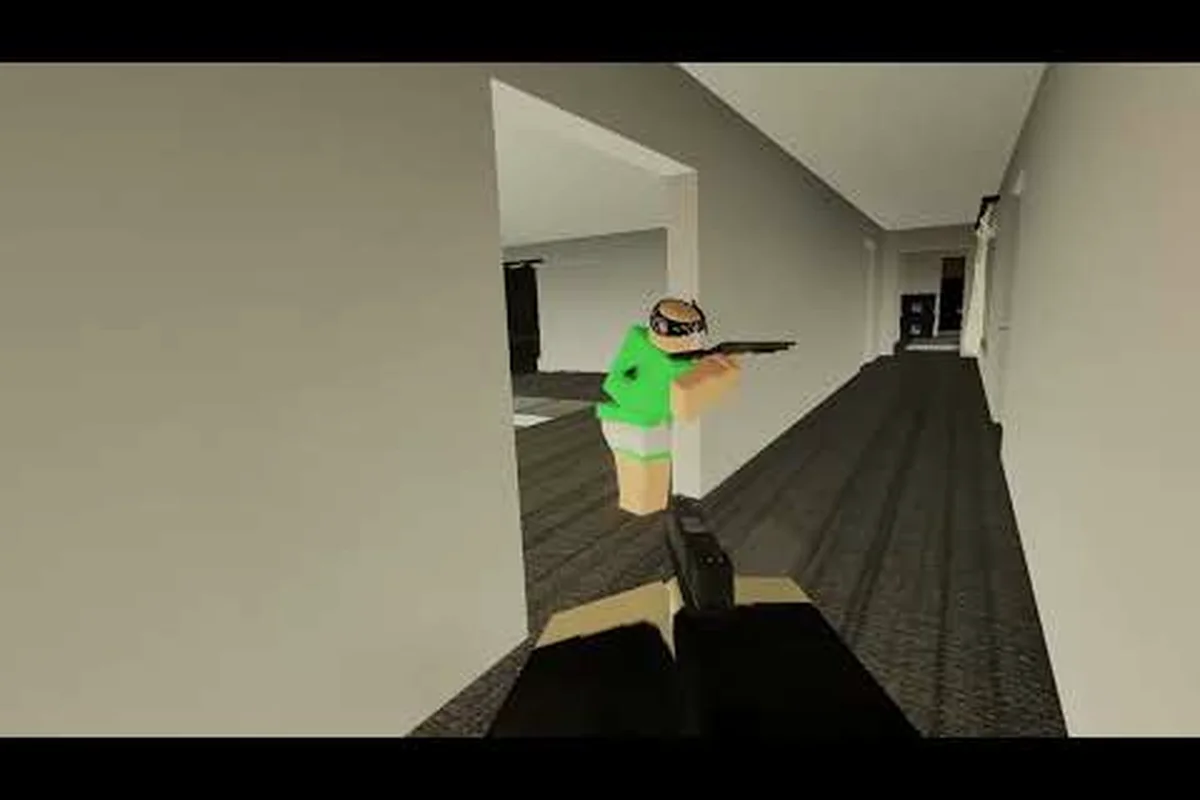
The REALISTIC HOME DEFENSE weapon roster splits into four working classes, and knowing what each one does before you spend cash is the difference between holding a hallway and losing the house. This arsenal guide breaks down pistols, SMGs, rifles, and shotguns so you can pick the right slot for every room.
How the REALISTIC HOME DEFENSE Weapon Roster Is Structured
Every gun in the game sits inside one of four classes, and each class follows its own recoil, reload, and fire-mode logic rather than sharing a single generic shooting model. That design choice is why the REALISTIC HOME DEFENSE weapons feel so different from one another: a pistol and a rifle can both kill an intruder, but they ask completely different things of your aim and your timing.
The roster is built around close-quarters home defense, so the classes are tuned for tight hallways, doorways, and stairwells instead of open-field combat. According to community gameplay captures, the biggest selling point is the realistic weapon feel — recoil patterns, reload timing, and selectable fire modes all matter during a breach.
Here is the class-level overview that anchors the rest of this guide: four classes — Pistols, SMGs, Rifles, and Shotguns — each occupying a distinct slot in the home-defense toolkit rather than competing for the same job. Pistols trade sustained damage for cheap, fast handling as a starter or backup; SMGs clear rooms on high fire rate but climb hard and burn ammo; Rifles win mid-range sightlines through strong per-shot damage at the cost of slower indoor handling; and Shotguns deny doorways with a massive close-range burst, balanced by a punishing reload and short effective range. Read the table below as a trade-off map, not a tier list — every strength is paid for somewhere else.
| Class | Typical Role | Strength | Main Trade-off |
|---|---|---|---|
| Pistols | Starter / backup | Fast handling, cheap | Low sustained damage |
| SMGs | Room clearing | High fire rate, mobile | Recoil climb, ammo burn |
| Rifles | Mid-range control | Strong per-shot damage | Slower handling indoors |
| Shotguns | Doorway denial | Massive close burst | Punishing reload, short range |
Each class also interacts with the shared control scheme, so the same Fire Mode toggle (V on keyboard, RB on controller) applies across the board. That consistency means skill you build on one weapon partially transfers to the next, which keeps the roster approachable even though the guns behave differently.
A useful way to think about the roster is as four answers to four different questions. Pistols answer "what do I have right now?" SMGs answer "how do I clear this room fast?" Rifles answer "how do I hold a long sightline?" Shotguns answer "how do I make this doorway lethal?" Once you frame the classes that way, loadout decisions stop being guesswork.
REALISTIC HOME DEFENSE Pistols: The Starter Arsenal Slot
Pistols are where almost every player begins, and they remain relevant long after you can afford bigger guns because of how quickly they come up and how little they cost to run. The class rewards precise, deliberate shots rather than spray, which makes it an excellent training ground for the game's recoil model.
If you are still learning the map flow and the economy, the beginner weapon and loadout breakdown explains how starting guns and buying decisions connect. The short version: pistols are cheap enough that a bad round does not wreck your cash, and accurate enough that a good round still ends fights.
Why pistols stay in the rotation
The strongest argument for keeping a pistol equipped is swap speed. When an intruder rounds a corner faster than expected, a pistol is already up and firing while a heavier weapon is still coming to bear. Players who run rifle-only loadouts often report losing exactly these surprise contacts.
Pistols also teach the fire-mode habit early. Tapping rather than holding the trigger conserves ammo and keeps your recoil predictable, and that discipline carries directly into SMG and rifle play later. In a realistic home defense arsenal guide, this matters most on a tight ammo budget: a pistol's light ammo draw leaves cash for your primary, so every saved magazine is a rebuy you can afford after a death. Practice tap-firing at doorway distance, where the fast equip time already wins the surprise contact — the same short, controlled bursts you'll later need to keep an SMG's recoil on target during a choke-point hold.
| Pistol Strength | What It Means in a Defense Round |
|---|---|
| Fast equip time | Wins surprise doorway contacts |
| Low cash cost | Cheap to rebuy after a death |
| Manageable recoil | Easy to land follow-up shots |
| Light ammo draw | Leaves budget for a primary |
That limitation shows up hardest in the damage-per-second math of a choke hold: a pistol's low per-shot damage and short effective range mean a determined push through a narrow doorway can absorb your whole magazine before it drops, whereas a rifle or shotgun would end the same contact in one or two hits. Treat it as your safety net and your economy tool — the cheap rebuy that keeps your primary funded — not your plan A once the round gets serious. The practical rule: hold a choke with your primary, and only fall back to the pistol when a fast corner forces the swap or when you're saving cash for a rifle after a death.
REALISTIC HOME DEFENSE SMG: Speed and Room Clearing
The SMG class is the roster's aggression pick. High fire rate and light handling make it the natural choice for pushing through a doorway, sweeping a corner, and resetting the fight on your terms. In a home-defense setting where most engagements happen inside ten meters, that speed converts directly into wins.
The cost is control. SMGs climb under sustained fire, and the class burns through ammunition faster than anything else in the roster, so a sloppy spray can leave you reloading at the worst possible moment. Community reports consistently flag recoil management as the skill gap that separates good SMG players from great ones.
Fire mode discipline with the SMG
Use the Fire Mode toggle deliberately. Burst or semi fire at mid distance keeps your shots on target, while full auto is reserved for genuine point-blank panic situations. Switching modes mid-fight is a real skill, and it is the single biggest improvement most SMG users can make.
A practical SMG routine looks like this: treat every magazine as a drill in fire mode discipline rather than a spray-and-pray dump. Start each engagement in semi or burst to land your first three or four rounds, then only bump to full auto when a threat closes inside point-blank range and accuracy stops mattering. Run one dry-reload rep behind cover for every corner you clear, and burn a full magazine on the recoil climb at a static target before you ever trust the gun in a hallway. Log which mode you actually used per engagement — most home defenders discover they default to full auto even at mid distance, which is exactly the habit the Fire Mode toggle exists to break.
-
Clear the nearest corner in short bursts rather than holding the trigger.
-
Reload behind cover every time you cross a threshold, not after the fight starts.
-
Keep a pistol as your backup so a dry magazine is not a death sentence.
-
Practice the recoil climb in a low-stakes round before trusting it in a real defense.
The SMG shines brightest when you are the one dictating the pace — its entire stat block is built around mobility, not sustained static defense. If you find yourself repeatedly holding a static angle and losing, the class is telling you to move; that is its whole design philosophy. Treat a lost angle-hold as data: it means your loadout has drifted toward a rifle's job while you are still carrying SMG-range damage falloff and a smaller magazine. The corrective is to rotate after every two- or three-round burst rather than re-peeking the same corner, using doorways and hallways as your repositioning lanes. In a realistic home defense roster, the SMG is the entry-and-clear tool you pair with a pistol backup — not the weapon you park behind the bedroom door and wait with.
REALISTIC HOME DEFENSE Rifles: Holding Angles and Mid-Range Control
Rifles trade the SMG's frantic speed for something more valuable in a defended house: reliable damage at the ranges where hallways and stairwells actually sit. A rifle lets you hold a sightline, punish a peek, and stay effective even when the fight stretches past the first doorway.
The class asks more of your positioning. Because rifles handle slower indoors, getting caught mid-reload or mid-turn is far more punishing than it is with a pistol. The players who get the most out of this slot are the ones who pick an angle, commit to it, and let intruders walk into their crosshair.
Matching the rifle to your defensive setup
Rifle choice should follow your home layout. Long central hallways and open stairwells favor the class heavily, while cramped multi-door rooms can leave you fighting your own weapon's handling speed. If your defense plan revolves around a single strong sightline, a rifle is close to mandatory.
The full weapon stats and comparison breakdown is worth reading alongside this section, because per-shot damage and handling numbers explain why two rifles that look similar can feel completely different in a hallway fight.
| Rifle Consideration | Recommended Approach |
|---|---|
| Long hallway | Hold the far end, pre-aim the doorway |
| Stairwell | Cover the landing, avoid pushing up |
| Multiple entrances | Pair with a shotgun or SMG holder |
| Tight interior rooms | Consider swapping to a lighter class |
Rifles reward patience more than any other class in the roster. The instinct after a kill is to push and press the advantage, but a rifle holder usually wins by staying put and letting the next intruder come to them.
REALISTIC HOME DEFENSE Shotgun: Doorway Denial Done Right
The shotgun is the roster's close-range specialist, and in a game built around defending a house, that specialization is far more useful than it sounds. A single well-placed blast at doorway distance ends a fight instantly, which makes the class the best pure deterrent in the game.
The trade-offs are steep and honest. Shotguns punish missed shots harder than anything else, reload slowly enough that a second intruder can catch you empty, and lose effectiveness quickly as distance grows. Players who treat the shotgun as a panic button rather than a positioned tool tend to be disappointed.
Positioning the shotgun for maximum value
The class belongs at chokepoints. Stand where intruders must pass through a narrow gap, keep your back to a wall you trust, and let the range advantage do the work. Firing from open floor at distance wastes the class's entire identity.
Pair the shotgun with a teammate or a backup pistol so the slow reload is covered. Community gameplay footage of full defense sessions shows how often a shotgun user's death comes during the reload window rather than during the actual exchange — a fixable problem with better positioning.
| Shotgun Strength | Best Use Case |
|---|---|
| Instant close burst | Doorway and corner ambush |
| Psychological pressure | Discourages direct pushes |
| Low aim requirement | Forgiving at point-blank |
| Strong first contact | Opening shot of a breach |
Used correctly, the shotgun is not a beginner's crutch — it is a specialist's tool that turns a predictable entry point into a no-go zone. The reason is mechanical: at doorway and corner distances the spread pattern covers the full width of a breach, so a defender who has pre-aimed at the funnel lands most of the pellet burst without tracking a moving target, while the same gun at open-floor range bleeds damage as the pattern widens past the intruder. That is why the class rewards map knowledge over raw aim — knowing which chokepoint the enemy must commit to is what converts the instant close burst and strong first contact from the strength table into a reliable opening shot, and why a shotgun posted on a predictable entry outperforms one roaming for picks.
Building a REALISTIC HOME DEFENSE Arsenal Guide Around Your Playstyle
The most common roster mistake is treating one class as universally best. In practice, the right REALISTIC HOME DEFENSE arsenal is a small combination that covers your layout and your habits, not a single perfect gun. A rifle for the long hall plus a pistol for emergencies covers more situations than two rifles ever will.
Start by identifying where most of your fights actually happen. If intruders consistently reach the same doorway, a shotgun there is worth more than any rifle upgrade. If they die at range before closing, your rifle is already doing its job and your cash is better spent elsewhere.
Handling stats are where roster theory meets actual fights: a shotgun's heavy per-shot recoil punishes panic-spamming in a tight doorway, while an SMG's light, fast-firing pattern lets you hold a corner aggressively but burns ammo and loses steam at distance. Those class-specific differences decide whether your chokepoint pick actually holds, so the recoil and gunplay guide breaks down how each weapon class behaves under pressure — the natural next step once you have picked your core loadout and want to confirm your primary and backup slots complement rather than fight each other.
A simple framework for choosing: map each slot to a role before you buy anything. Your primary should answer the question "where do most of my fights happen?" — a rifle if intruders die at range down a long hall, an SMG if you are the one pushing rooms, a shotgun if a single doorway is your hard chokepoint. Your backup is always a pistol, because swap speed and a cheap rebuy matter more than raw damage when your primary runs dry mid-fight. Then apply the budget rule: keep enough cash in reserve that losing a round does not force you into a worse gun next round. Finally, the adaptation rule ties it together — if a class keeps losing you fights in one specific room, swap the class for that space instead of grinding your aim, since a shotgun that whiffs in a tight doorway will not be fixed by better crosshair placement.
-
Primary slot: rifle for long sightlines, SMG for aggressive room control, shotgun for a single hard chokepoint.
-
Backup slot: always a pistol, regardless of primary, for swap speed and economy safety.
-
Budget rule: never spend your entire cash reserve on one gun; a rebuy after a bad round should still be affordable.
-
Adaptation rule: if a class keeps losing you fights in a specific room, change the class, not your aim.
Treat the roster as a set of tools matched to spaces rather than a ladder you climb once — a shotgun parked on your hard chokepoint and a rifle covering the long hall are not competing upgrades but two answers to two different rooms, so "upgrading" the shotgun into a second rifle actually removes coverage. That mindset keeps your loadout flexible across rounds: when the fight shifts from the doorway to the corridor, you rotate the class that fits the new space instead of forcing one gun to do both jobs, and your defense stays consistent because every slot still maps to a role you already validated in the framework above.
Frequently Asked Questions
What is the best starting weapon in the REALISTIC HOME DEFENSE weapon roster?
Pistols are the strongest starting pick because they cost little, equip fast, and teach the recoil and fire-mode habits that carry into every other class. They also double as a permanent backup, so the early investment never becomes wasted cash later.
Are REALISTIC HOME DEFENSE rifles better than SMGs?
Neither is strictly better; they solve different problems. Rifles win long hallway and stairwell fights thanks to stronger per-shot damage, while SMGs dominate fast room clearing. Choose based on where your fights actually happen rather than raw damage numbers.
How should I use the REALISTIC HOME DEFENSE shotgun without dying on reload?
Position at chokepoints instead of open floor, fire only at close range, and always keep a pistol as backup so a slow reload is not fatal. Most shotgun deaths happen during the reload window, and better positioning fixes that more reliably than better aim.
Does fire mode matter for REALISTIC HOME DEFENSE weapons?
Yes. The shared Fire Mode toggle lets you switch between full auto, burst, and semi fire on the fly. Using burst or semi at mid range keeps recoil predictable, while full auto is reserved for genuine point-blank emergencies inside tight rooms.
Can I run one class for an entire defense?
You can, but it usually costs you. A single class leaves obvious gaps — rifle-only loadouts lose surprise doorway contacts, and shotgun-only setups struggle at range. Pairing a primary with a pistol backup covers far more situations for very little extra cost.
The REALISTIC HOME DEFENSE weapon roster rewards players who match classes to spaces instead of chasing a single best gun. Learn what pistols, SMGs, rifles, and shotguns each do well, build a two-slot loadout around your home layout, and keep your fire-mode discipline sharp — that combination holds a house far more reliably than any one weapon ever will.